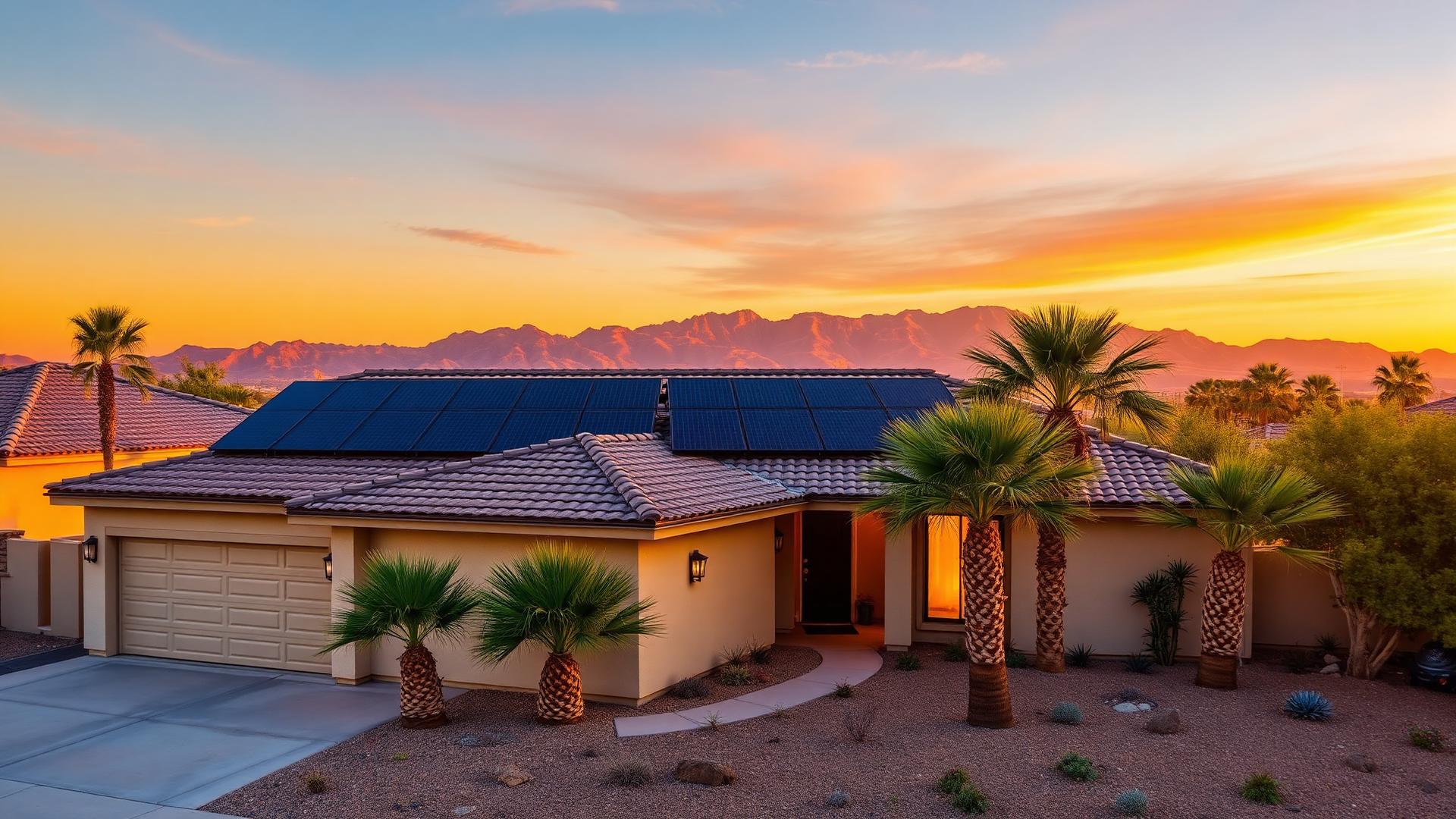
Everything El Cajon homeowners ask about solar
Cost, NEM 3.0, batteries, permits, warranties, SDG&E, and the honest answers we give at kitchen tables across East County San Diego.
Solar answers for East County homeowners
Real answers for El Cajon homeowners exploring residential solar.
How much does solar cost in El Cajon?+
A typical El Cajon home solar system runs $14,000 to $32,000 before the 30% federal tax credit. Bigger drivers than location are usage (kWh per year), roof material (tile is more labor-intensive than composition shingle), and whether you add a battery for NEM 3.0.
How long does a solar installation take?+
The physical install is usually 1–2 days on the roof. From signed contract to Permission to Operate from SDG&E, most El Cajon projects finish in 6–10 weeks depending on City of El Cajon or County of San Diego permitting and the SDG&E interconnection queue.
Is my El Cajon roof a good candidate for solar?+
Most East County roofs work well. South, southwest, and west exposures produce the most, but east-facing planes still pencil out. Shading from pepper trees, palms, and neighboring two-story homes is the most common issue we design around.
Do I need a battery under NEM 3.0?+
Not required, but battery-backed systems typically pay back faster now than solar-only under NEM 3.0. If you use a lot of evening power, want backup for Santa Ana PSPS events, or want to maximize what your solar is worth, a battery usually pencils out.
Will solar eliminate my SDG&E bill?+
A well-designed system typically offsets 85–100% of a year's usage. You'll still have small SDG&E connection charges each month, and winter production is lower than summer, but most El Cajon homeowners see their bill drop dramatically.
What panels and inverters do you install?+
We install Tier 1 mono-PERC and N-type panels (REC, Q CELLS, Silfab) paired with Enphase microinverters or SolarEdge string inverters with power optimizers. Panel choice depends on roof pitch, shading, and aesthetic preference (all-black vs black-frame).
Do you install Tesla Powerwall?+
Yes. Powerwall 3 is our most common battery in El Cajon, though we also install FranklinWH and Enphase IQ Battery depending on system design, backup goals, and SGIP tier.
How long do solar panels last?+
Modern Tier 1 panels carry 25-year production warranties and typically produce for 30+ years at 80%+ of original output. Inverters (microinverters or string) usually last 12–25 years depending on brand and are the most likely component to be replaced during the panel's lifetime.
What's the workmanship warranty on your installs?+
We back the labor and roof penetrations with a 25-year workmanship warranty. Panels and inverters carry their own manufacturer warranties (typically 25 years for panels, 12–25 years for inverters, 10 years for batteries).
Are you licensed and insured?+
Yes. We hold a California C-46 solar contractor license, carry full general liability insurance, and provide workers' comp for every installer on your roof. We'll show you the certificates before contract signing.
Do you handle permits and SDG&E interconnection?+
Yes, we handle everything: City of El Cajon or County of San Diego building permits, structural review if required, SDG&E interconnection application, inspection scheduling, and Permission to Operate. You just sign the DocuSigns we send.
What is the 30% federal solar tax credit?+
The Residential Clean Energy Credit returns 30% of your total solar and battery installation cost as a non-refundable federal tax credit for the year the system is placed in service. It carries forward if you can't use it all in year one. Confirm details with your CPA.
Are there rebates besides the federal tax credit?+
For battery storage, California's SGIP program provides direct rebates that can meaningfully offset a Powerwall, especially under Equity and Equity Resiliency tiers. There is no active general California rebate for solar panels themselves in 2026.
Will solar increase my property tax?+
No. California excludes the added value of solar from property tax reassessment. Your home's assessed value doesn't rise because you added solar.
Does solar add to my home's resale value?+
Owned systems generally add value at resale and transfer cleanly to new owners. Leases and PPAs are more complicated to transfer and can slow down closings if the buyer's lender pushes back.
What if I re-roof after installing solar?+
We do panel removal and re-installation for El Cajon homeowners re-roofing an existing solar array, ours or someone else's. We coordinate directly with your roofer to minimize downtime.
How much roof space do I need?+
As a rule of thumb, about 60 square feet per kW of solar. A 7 kW system (typical El Cajon home) needs roughly 400–500 usable square feet of unshaded roof. Tile and complex hip roofs use space less efficiently than a big flat comp-shingle plane.
Can I add panels to my system later?+
Yes, if we designed the system with expansion in mind. Microinverter systems (Enphase) are the easiest to expand. String inverter systems can also be expanded, but sometimes require an inverter upgrade if you're near capacity.
What happens during a power outage?+
Grid-tied solar without a battery shuts down during an outage for safety (anti-islanding). If you want power during outages, including SDG&E PSPS events, you need a battery. We'll size the battery for the critical loads you want to keep running (fridge, WiFi, medical, a few outlets, or whole-home).
How does net metering work under NEM 3.0?+
Under NEM 3.0 (technically the 'Net Billing Tariff'), export credits are worth roughly 75% less than under NEM 2.0. This is why battery pairing matters so much now, storing your own solar for evening use is worth far more than exporting it.
Am I too late to get NEM 2.0?+
Yes. NEM 2.0 closed to new applications on April 14, 2023. Every new El Cajon interconnection since then is under NEM 3.0. If you had a NEM 2.0 interconnection before that date, your grandfather status runs 20 years from your original PTO.
Should I get solar before or after a re-roof?+
If your roof has fewer than 10 years of life left, re-roof first. Removing and reinstalling solar during a roof job adds cost. If your roof is in good shape (15+ years remaining), solar first is fine.
What is the payback period on solar in El Cajon?+
For most El Cajon homes, cash purchases pay back in 6–9 years and $0-down loans have day-one positive cash flow (loan payment lower than the old SDG&E bill). Battery-inclusive systems payback in 7–11 years.
Does solar work in cloudy weather?+
Yes, at reduced output. Panels still produce 10–25% of their rated output under heavy overcast. El Cajon's marine layer (May Gray, June Gloom) shows up in your production data but doesn't materially hurt annual output.
How hot does my El Cajon roof get, and does that hurt solar?+
Very. East County summer roof temps regularly hit 150°F+. Panel efficiency drops slightly at high temps, we account for this in the design, and the frame air gap helps panels shed heat.
How often do solar panels need cleaning in El Cajon?+
Rarely. San Diego winter rains usually handle it. If you're near a lot of dust, a bird colony, or a busy road, an annual rinse can bump production a few percent. We don't push cleaning contracts you don't need.
Do I need permission from my HOA?+
California's Solar Rights Act limits HOA authority over rooftop solar, an HOA can require reasonable aesthetic changes but can't effectively block or price-out a system. Most El Cajon HOAs have a simple architectural review form we help you fill out.
Can I take solar with me if I move?+
Technically yes, but almost never worth it, the removal, re-permit, and re-install cost usually exceeds the resale value premium solar adds to the home you're leaving. Sell the house with the solar.
Do you install EV chargers?+
Yes. We install Tesla Wall Connectors and universal Level 2 chargers (ChargePoint, Wallbox, JuiceBox), often at the same time as solar so we can size the electrical service upgrade once.
Will I need a main panel upgrade?+
Sometimes. Homes with 100A service, older Zinsco or Federal Pacific panels, or full panel loads may need an upgrade or a line-side tap to accommodate solar. We check during the site survey and quote it clearly if needed.
What's a line-side tap vs a load-side connection?+
A load-side connection ties solar into your existing main panel breaker (simpler, most common). A line-side tap connects solar between the utility meter and your main panel (used when your panel is too full for load-side). Both are code-compliant.
How is my system monitored?+
Every install comes with a manufacturer monitoring app (Enphase Enlighten, SolarEdge mySolarEdge, or Tesla app) that shows real-time and historical production, per-panel data, and battery state of charge. We also watch alerts on the back end.
What if a panel fails after installation?+
Panels are under 25-year manufacturer warranty. Microinverters are individually warrantied for 25 years (Enphase), we swap the failed unit and file the warranty claim. Downtime is typically minimal because other panels keep producing.
Do you finance batteries added to an existing solar system?+
Yes. Battery-only add-ons qualify for both the 30% federal tax credit and California SGIP. Financing is available through the same $0-down lenders we use for full solar installs.
How does the site survey work?+
After the consultation, one of our designers visits your home to measure the roof, check attic access, evaluate the main panel, and confirm shading. It takes about an hour and there's no cost or obligation.
Do you subcontract the install?+
No. Our own W-2 crews do the roof work and electrical. We don't use lowest-bid subs. This is the biggest quality differentiator most homeowners overlook when comparing quotes.
Can I add solar to a new-construction home in El Cajon?+
Yes. California's Title 24 requires solar on most new single-family homes, but the builder-installed system is often undersized. We install solar on new-construction homes both during and after builder handoff.
Do you install ground-mount solar?+
Occasionally, for rural East County parcels (Alpine, Jamul, Harbison Canyon). Ground-mount adds trenching and framing cost, but it's the right answer for shaded or complex roofs on larger lots.
What areas do you serve?+
El Cajon and all of East County San Diego: La Mesa, Santee, Lakeside, Rancho San Diego, Spring Valley, Lemon Grove, Alpine, Jamul, Harbison Canyon, Bostonia, Granite Hills, Winter Gardens, and Fletcher Hills.
How do I get started?+
The fastest path is our savings calculator. From there, we schedule a free consultation, do a site survey, and send a detailed proposal within 3–5 business days.
What's the best time of year to install solar?+
Any time. Winter production is lower but permitting queues are typically shorter, so a winter install has you fully activated before summer AC season. Summer installs happen fast on the roof but see longer SDG&E interconnection waits.
Ready to see what solar could save you in El Cajon?
Get a free, custom solar savings estimate built around your actual electric bill, roof, and home, not a generic quote.